
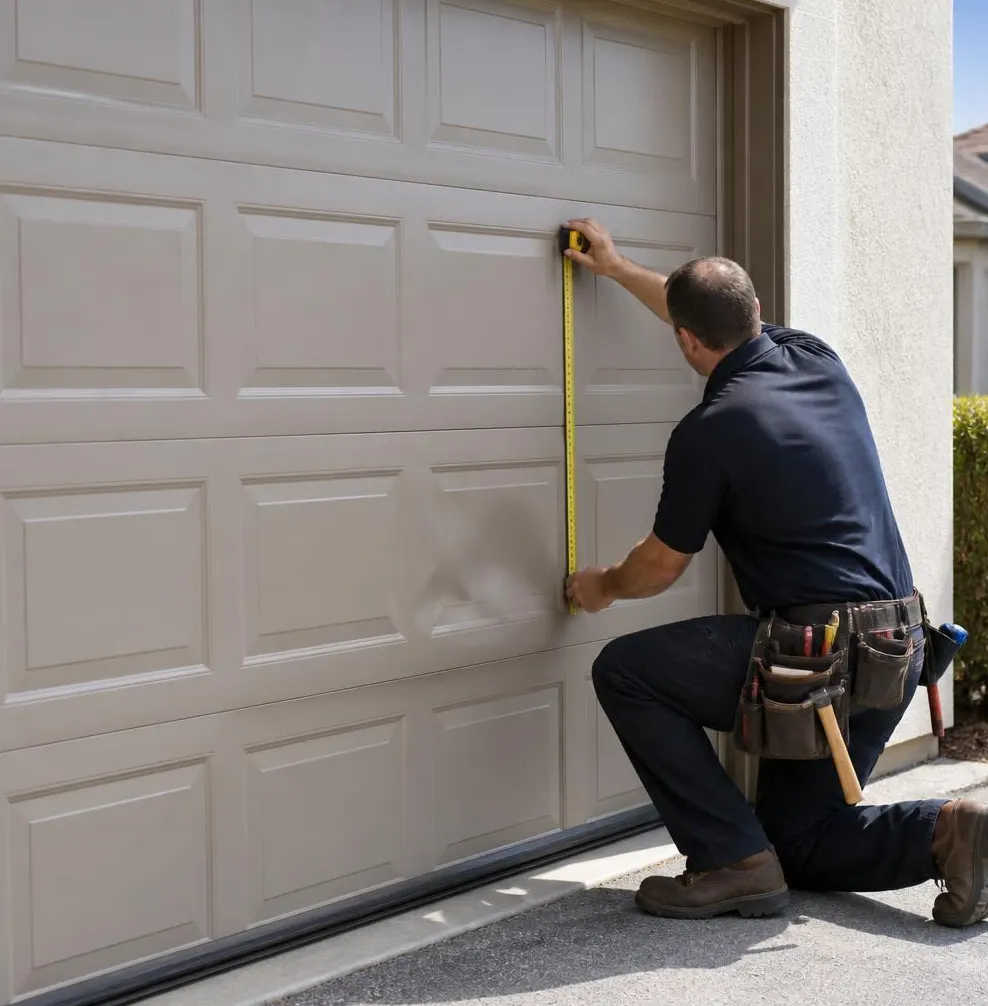
Every winter, ice storms knock out power across Huron Township and the rest of the area, and somewhere a New Boston homeowner is standing in a cold garage staring at a red handle they've never touched, trying to figure out how to get the car out before the driveway ices over too. If you wait until that moment to learn how your garage door's emergency release actually works, you're gambling with a door that can weigh 130 to 400 pounds and a spring system that may already be weaker than you think. Put off learning this now, and the bill for finding out the hard way isn't just a repair call—it's a dented car, a door ripped off its track, or a hand caught where it shouldn't be.
What That Dangling Red Handle Is For
The emergency release cord disconnects the door from the trolley that rides along the opener's rail. Pull it, and the opener stops controlling the door entirely—no motor, no belt or chain pulling it, nothing but the springs and your own muscle holding it up or letting it down. It exists for one reason: so a closed garage door doesn't become a locked door the moment the opener can't run it.
When Pulling It Is the Right Call
- Power is out and you need the car out or in before the storm gets worse.
- The opener hums, clicks, or runs but the door won't move—something in the drive system has failed, not the door itself.
- The door is stuck partway through a cycle and you need to move it manually to get it fully open or closed.
In all of these, the goal is the same: take the motor out of the equation so you can move the door by hand.
When Pulling It Makes Things Worse
The cord itself is simple. The risk is what's on the other side of it. A properly balanced door with good springs will stay roughly where you put it and lift with one hand. A door with a weakened or broken spring will not—it can drop fast and hard the instant it's disconnected from the opener, because the opener was the only thing still holding it up.
This matters more here than in milder climates. Cold makes torsion springs more brittle, and a winter of road salt tracked in on tires and boots speeds up corrosion on spring coils and hardware. A door that felt fine when you last touched it in September can be carrying a compromised spring by January without any obvious warning sign—until the moment you pull the cord expecting resistance and get none.
A few other ways this goes wrong:
- Ice and snow add weight. A door with buildup on top or a frozen bottom seal is heavier and stickier than normal, which changes how it behaves the second it's disconnected.
- Pulling mid-cycle. Releasing the cord while the door is actively moving can cause it to drop suddenly rather than stop in place.
- A frayed cord. Repeated temperature swings between a heated house and an unheated garage dry out and weaken the cord and handle over time. The one time you yank it hard in a panic is the one time it can snap.
- Forgetting to reconnect. Leave the door disconnected and it won't respond to your opener or keypad at all—which looks exactly like a broken opener, sending you chasing the wrong problem.
Two Minutes That Prevent a Bad Night
- Check it before storm season, not during one. With the door closed, pull the cord and lift the door a foot or so by hand. It should move smoothly with one hand and stay roughly in place when you let go. Fast dropping or heavy resistance means the springs need attention now, not during the next outage.
- Look at the cord and handle. Fraying, cracking, or a handle that's pulling loose from its mount is a cheap fix today and a bad surprise later.
- Clear ice and snow from the tracks before trying to move the door manually—frozen tracks fight you in ways that have nothing to do with the springs.
- Reconnect correctly after use. Guide the trolley back onto the rail and run the opener once to confirm it's actually engaged before you trust it again.
- Show everyone in the house where the cord is and how it works. The middle of a power outage is not the time for a first lesson.
When to Call New Boston Garage Door
If your manual lift test feels heavy, the door drops faster than it should, or the opener won't reconnect properly, that's not a cord problem—it's almost always a spring problem, and it's not something to force. We handle Spring Replacement regularly across New Boston, Huron Township, Romulus, Belleville, Flat Rock, Sumpter Township, Van Buren Township, and Woodhaven, and we also offer Garage Door Maintenance visits that catch corroded hardware and worn cables before they turn into a disconnected door you can't trust. If you're genuinely stuck—door open, power out, car trapped—our Emergency Garage Door Service is built for exactly that call.
Don't wait for the first ice storm to find out what shape your springs are in. Call New Boston Garage Door today and get it checked before winter makes the decision for you.